
Diwali falls on Sunday, 8 November this year and Chhath Puja runs from 13 to 16 November, which means packed trains towards Bihar and eastern UP, overnight buses and long highway drives home. For many women the hardest part of the trip isn't the crowd. It's the toilet. Good public toilet hygiene, and drinking water instead of skipping it to avoid the loo, are the two habits that matter most.
Below you'll find why holding urine and dehydration matter, the UTI symptoms that need a doctor, a step-by-step for squat and Western toilets on trains and highways, a packing checklist, and tips for travelling with children, older parents and a pregnancy bump.
Key takeaways
- Holding urine for hours and drinking too little are both linked to UTIs, so drink steadily and go when you feel the urge.
- Burning when you pee with a fever, back pain under the ribs or blood in your pee needs a doctor the same day.
- Prepare before you enter a public toilet, keep your bag and clothes off the floor, and clean your hands before you eat.
- Seat covers suit Western seats and a pee funnel suits squat toilets; bin used covers, never flush them.
- Children, older parents and pregnant women need more frequent stops and closer attention to water on long trips.
On this page
- 01Holding urine while travelling: side effects and why it matters
- 02UTI symptoms in women: what to watch for on a trip
- 03How to avoid UTI while travelling: habits that help
- 04Public toilet hygiene: how to use a train or public toilet, step by step
- 05Female urination device: can a pee funnel help on trains and highways?
- 06Travel hygiene kit: what to pack for a festive trip
- 07Diwali travel tips for road trips with kids, older parents and pregnancy
Holding urine while travelling: side effects and why it matters
Holding urine for hours gives bacteria in the bladder more time to grow, which is why the NHS and Cleveland Clinic both advise going as soon as you feel the urge. Drinking less to avoid the toilet adds a second problem: dehydration, which means you pee less often and flush germs out less.
The NHS lists not drinking enough among the risk factors for UTIs, and women are more prone to start with: MedlinePlus notes that about four times as many women get UTIs as men; the NHS explains that a shorter urethra gives bacteria less distance to travel.
Signs you're not drinking enough
Dark yellow, strong-smelling pee and peeing less often than usual are signs of dehydration, says the NHS. Aim for pee that stays a pale colour through the day. Babies, children and older adults are more at risk.
UTI symptoms in women: what to watch for on a trip
The common UTI symptoms in women are pain or burning when you pee, needing to go more often or more urgently, cloudy pee and lower tummy pain. A fever, shivering, pain in your back just under the ribs, or blood in your pee can mean the infection has reached the kidneys, and needs a doctor promptly.
In older people, the NHS notes that a UTI can show up as new confusion, worse leaking or shivering. If your nani seems unusually muddled after a long trip, tell a doctor.
How to avoid UTI while travelling: habits that help
You can't control a train toilet, but you can control your habits. Drink water steadily, pee when you feel the urge instead of waiting, empty your bladder fully, wipe from front to back, and wear breathable cotton underwear. These are the everyday steps the NHS and Cleveland Clinic recommend to lower the chance of a UTI.
Habits for the road
- Sip water steadily through the day rather than gulping a whole bottle at once
- Use every decent toilet you pass: the hotel before checkout, the clean dhaba, the airport before boarding
- Take your time and empty your bladder fully, rather than rushing out halfway
- Wipe from front to back, every time
- Wear breathable cotton underwear and skip very tight jeans for long sits
- Skip scented soaps and sprays on intimate skin; plain water is enough
- If you're travelling with your partner, pee as soon as you can after sex
Public toilet hygiene: how to use a train or public toilet, step by step
For better public toilet hygiene, get ready before you go in, keep your bag and clothes off the floor, cover the seat or avoid touching it, bin anything that isn't toilet paper, and clean your hands before you touch food or your phone. Each step takes seconds and makes a grim toilet much easier to face.
Get ready outside
Take out what you need before you go in: tissues, a seat cover or funnel, sanitiser. Rummaging inside the cubicle is how phones land on the floor.
Check your options
Many long-distance coaches have more than one toilet, often a mix of Indian-style and Western. If one is flooded or dry, try another.
Hang, don't drop
Hang your bag on the hook or keep it across your body. Tuck in your dupatta or saree pallu so it can't touch the floor.
Deal with the seat
On a Western seat, lay a seat cover edge to edge instead of hovering, or stand and use a funnel. On a squat toilet, keep your feet on the foot rests and hold the grab rail.
Take your time
Relax and empty your bladder fully, even in a dirty toilet.
Wipe front to back
With paper or water, always front to back, then pat dry.
Bin, don't flush
Seat covers, pads, liners and wipes go in the bin. Train toilets and older plumbing block easily.
Clean your hands
Wash with soap for at least 20 seconds. No soap? Rinse with water and follow with a sanitiser of at least 60% alcohol. Our handwashing guide has the full method.
Squat vs Western toilet: which is more hygienic?
| Indian (squat) toilet | Western (sit-down) toilet | |
|---|---|---|
| Skin contact | No seat, so no skin contact with a seat | Your thighs rest on a shared seat unless you cover it |
| Splashes | Splashes on feet and clothes are common, so hitch clothes up well | Fewer splashes on your feet |
| Comfort | Hard on knees, hips and a pregnancy bump; tricky on a moving train | Easier for older people, children and pregnancy |
| What helps | A pee funnel, so you can stand instead of squatting | Disposable seat covers, binned after use |

From Looway
Looway Toilet Seat Covers
Looway seat covers are disposable, wet-proof paper that sits edge to edge on a Western seat so you can sit instead of hover; push out the centre panel first, then fold and bin the cover, because it is not flushable.
Female urination device: can a pee funnel help on trains and highways?
A female urination device, or pee funnel, is a soft, reusable funnel you hold against the outside of your body so you can pee standing up, mostly dressed, without squatting or touching a seat. It's useful over a squat pan on a moving train, a Western seat you won't sit on, or a roadside stop with no toilet.
Practise at home first, in the shower or over your own toilet. Place the back edge a little further back than you expect, press the rim snugly and start slowly. A small spill during practice is normal.
To be clear about what these are: a funnel, a seat cover and a pee bag are hygiene and comfort products, not medical devices, and they don't claim to prevent, treat or cure any condition. What they do is help you avoid an unhygienic seat and make it easier not to hold urine for hours, which the NHS advises against.

From Looway
Looway Reusable Pee Funnel
The Looway Pee Funnel is soft, reusable silicone for external use only; rinse or wipe it while you're out, wash it with soap and water at home, and store it dry in its cotton pouch.
For stretches with no toilet at all, such as an expressway traffic jam, Looway pee and puke bags turn urine or vomit into a gel and seal leak-proof until you reach a bin.
Travel hygiene kit: what to pack for a festive trip
A good travel hygiene kit covers three situations: a dirty Western seat, a squat toilet you'd rather not crouch over, and no toilet at all. Pack seat covers, a pee funnel, a few pee bags, soap strips and sanitiser, tissues, period products and a full water bottle in one pouch you can reach without unpacking.
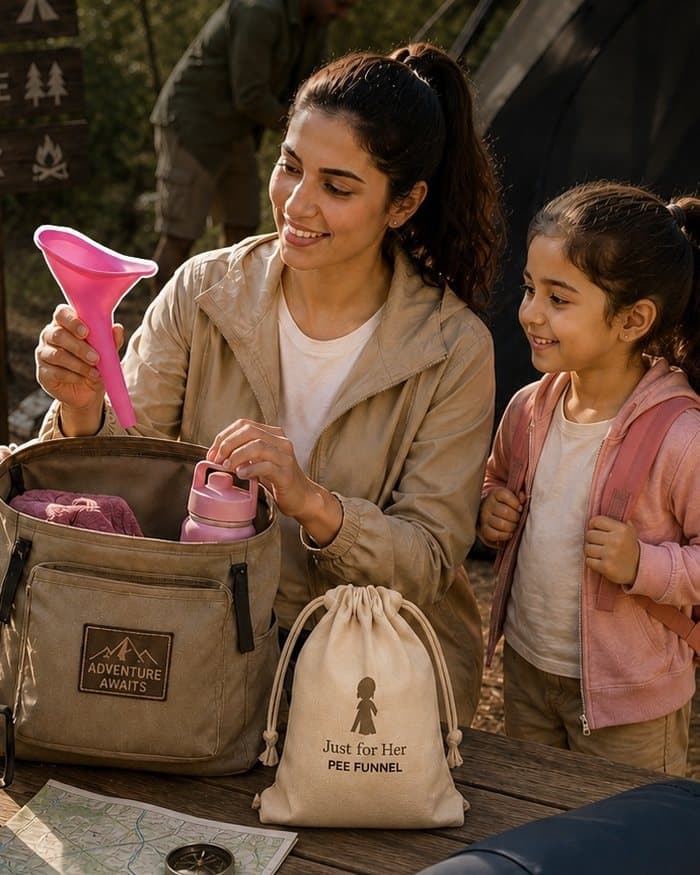
Pack this in one easy-to-reach pouch
- A water bottle you actually refill
- Hand sanitiser with at least 60% alcohol
- Paper soap strips or a small bottle of liquid soap
- Tissues or a small roll of toilet paper
- A few disposable toilet seat covers
- A pee funnel in its pouch, in an outer pocket
- Two pee and puke bags per traveller for long road stretches
- Pads, liners or a period panty if your dates might fall on the trip
- A zip pouch or newspaper to wrap used items until you find a bin
- Spare underwear and a torch for night-time trips to the coach toilet
If you'd rather not assemble it yourself, the Looway Yatra Kit lets you start from a ready-made kit and change it to suit your trip.
Diwali travel tips for road trips with kids, older parents and pregnancy
On long drives, plan regular toilet stops every couple of hours instead of waiting for someone to ask, choose fuel stations and dhabas with cleaner washrooms, and keep water, snacks and bags within reach. Children and older adults are more at risk of dehydration, and pregnancy means more frequent trips to the toilet.
Travelling with children
Ask children to try the toilet at every stop, even if they say they don't need to. Place the seat cover yourself before your child sits. For a toddler on the highway, a pee bag held like a potty saves a roadside scramble.
Travelling with older parents
Squatting hurts stiff knees and low, dirty seats feel unsafe, so many older women quietly drink less on travel days. Encourage regular sips and watch for the UTI signs above, including new confusion.
Travelling while pregnant
A growing bump makes squatting and hovering harder, and you'll need the toilet more often. Book an aisle seat near the toilet, keep drinking, and see a doctor promptly for any UTI symptoms. A pee funnel is for external use only; check with your doctor if you have concerns.
Motion sickness on hill roads and buses
The NHS suggests sitting where there's less motion, such as the front of a car, looking at the horizon, getting fresh air and avoiding reading or screens. Break up long journeys, skip heavy or spicy meals before you set off, and distract children with chat or songs. A pharmacist or doctor can advise on anything more.
Frequently asked questions
Can you get a UTI from a public toilet seat?
The NHS explains that UTIs are usually caused by bacteria from poo entering the urinary tract, which is why wiping front to back matters. On a trip, habits count for a lot: holding urine for hours and not drinking enough. A seat cover or funnel is about hygiene and comfort, so you avoid contact with a wet, dirty seat.
Is it bad to hold your pee on a long journey?
Making a habit of it isn't a good idea. Cleveland Clinic says holding urine too long gives bacteria a chance to grow, and the NHS advises not holding your pee in when you feel the urge. On long trips, use every clean toilet you pass, keep drinking water, and carry a funnel or pee bag for the long stretches.
What are the first signs of a UTI in women?
The early signs are usually burning or stinging when you pee, needing to go more often or urgently, cloudy pee and discomfort low in your tummy. With a fever, shivers, pain in your back just under the ribs or blood in your pee, see a doctor the same day. If you are pregnant, see a doctor for any of these.
How can I avoid a UTI while travelling by train?
Keep sipping water so your pee stays pale, go when you feel the urge rather than waiting for a cleaner toilet, empty your bladder fully and wipe from front to back. Carrying seat covers or a pee funnel makes the coach toilet easier to face, so you're less tempted to hold on.
Are toilet seat covers flushable?
Looway toilet seat covers are not flushable. Fold the used cover and drop it in the waste bin, never down the toilet, because flushed paper covers can block drains and older plumbing. Seat covers are also only for Western sit-down toilets; a squat toilet has no seat to cover, so a pee funnel is the better option there.
How do you use a female urination device for the first time?
Practise at home in the shower or over your toilet before your trip. Move your clothing aside, hold the wide end over the whole area with the back edge slightly further back than you'd expect, and press the rim snugly against your skin. Tilt the spout down and away, start slowly, then relax.
Sources

Team Potent Hygiene
Written by the Potent Hygiene team in Jaipur, the people behind Ovy period care and Looway travel hygiene. Every article is checked against the public health sources listed with it.