
Your period turns up after 45 days, then disappears for three months. Your skin breaks out along the jaw, a few dark hairs appear on your chin, and the scale creeps up even though you eat the same dal-roti as everyone at home. These are classic PCOS symptoms, and in India they are often brushed off as "just hormones" or "it will settle after marriage".
This guide explains what PCOS is (and why it is being renamed PMOS), the early signs, how a doctor diagnoses it, and what an everyday Indian diet and routine can do to help. It also covers the long-term health checks that matter, how to manage an unpredictable period, and when to see a doctor.
What is PCOS, and why is it now called PMOS?
Polycystic ovary syndrome (PCOS) is a long-term hormonal condition that affects how the ovaries work, how often you ovulate and how your body handles insulin. The WHO estimates it affects 10 to 13% of women of reproductive age worldwide, and says up to 70% of women with it do not know they have it.
In May 2026, an international consortium led from Monash University announced in The Lancet that the condition will be renamed polyendocrine metabolic ovarian syndrome (PMOS). The old name suggested the ovaries are full of cysts, which is misleading: the small follicles seen on a scan are not harmful cysts, and the condition affects metabolism and hormones across the body. The switch is being rolled out over about three years, so you will see both names for a while. We use PCOS here because it is what most people still search for.
- of Indian women aged 18 to 40 met the Rotterdam criteria for PCOSSource: ICMR-PCOS study, JAMA Network Open, 2024
- 19.6%
- of women with PCOS worldwide do not know they have itSource: WHO
- Up to 70%
- of Indian women with PCOS in that study also had metabolic syndromeSource: JAMA Network Open, 2024
- 24.9%
What are the early PCOS symptoms?
The most common PCOS symptoms are irregular, infrequent or absent periods, acne or oily skin, extra hair on the face, chest or tummy, thinning hair on the scalp, and weight gain or difficulty losing weight. Symptoms usually begin in the teens or early 20s, and they can be mild in one woman and severe in another.
Irregular periods
- What you might notice
- Cycles longer than 35 days, or months with none, then a heavy one
- Why it happens
- Ovulation is not happening regularly
Acne and oily skin
- What you might notice
- Breakouts on the jaw, chin and back that last past the teenage years
- Why it happens
- Raised androgens (hormones present in everyone in small amounts)
Extra hair (hirsutism)
- What you might notice
- Dark, coarse hair on the upper lip, chin, chest or tummy
- Why it happens
- Raised androgens
Scalp hair thinning
- What you might notice
- A wider parting or thinning at the crown
- Why it happens
- Raised androgens
Weight changes
- What you might notice
- Weight that gathers around the waist and is hard to lose
- Why it happens
- Often insulin resistance underneath
Dark skin patches
- What you might notice
- Velvety dark skin on the neck, underarms or groin
- Why it happens
- A common sign of insulin resistance
Low mood or anxiety
- What you might notice
- Feeling low, anxious or worn down by the symptoms
- Why it happens
- Recognised by the NHS as part of PCOS
| Symptom | What you might notice | Why it happens |
|---|---|---|
| Irregular periods | Cycles longer than 35 days, or months with none, then a heavy one | Ovulation is not happening regularly |
| Acne and oily skin | Breakouts on the jaw, chin and back that last past the teenage years | Raised androgens (hormones present in everyone in small amounts) |
| Extra hair (hirsutism) | Dark, coarse hair on the upper lip, chin, chest or tummy | Raised androgens |
| Scalp hair thinning | A wider parting or thinning at the crown | Raised androgens |
| Weight changes | Weight that gathers around the waist and is hard to lose | Often insulin resistance underneath |
| Dark skin patches | Velvety dark skin on the neck, underarms or groin | A common sign of insulin resistance |
| Low mood or anxiety | Feeling low, anxious or worn down by the symptoms | Recognised by the NHS as part of PCOS |
Having one of these does not mean you have PCOS. Thyroid problems, raised prolactin, stress and big weight changes can all cause similar signs, which is why a doctor needs to look at the whole picture. Our guide to irregular periods causes walks through the other common reasons.
How is PCOS diagnosed?
Doctors usually diagnose PCOS using the Rotterdam criteria: at least two of irregular or absent ovulation, signs of raised androgens (on your skin and hair or on a blood test), and a particular ovary appearance on ultrasound, once other causes have been ruled out. A scan showing "polycystic ovaries" on its own is not PCOS.
Step 1: Your history
The doctor asks about your cycle, skin, hair, weight and family history. Bring your period dates; a few months logged in our free period tracker makes this much easier.Step 2: Blood tests
These usually check hormone levels, and often blood sugar, cholesterol and thyroid function to rule out other causes and look at your metabolic health.Step 3: An ultrasound, if needed
The NHS notes an ovary scan is used only for adults, because young ovaries can look this way naturally. In teens, diagnosis rests on periods and androgen signs.Step 4: A plan for what you want
Treatment is chosen around your goals: regular periods, help with skin and hair, weight, or getting pregnant. There is no single PCOS treatment.
PCOS diet: what should an Indian PCOS diet look like?
There is no single "PCOS diet", and no food cures it. What helps most is a steady, balanced way of eating that keeps blood sugar even: more fibre, enough protein at every meal, fewer refined carbs and sugary drinks, and regular meal times. WHO says healthy eating and physical activity benefit all women with PCOS, even if their weight does not change.
The good news is that a traditional Indian kitchen already has most of what you need. The trick is the proportions on your plate, not expensive superfoods.
White rice or maida rotis at every meal
- Try more of
- Half your plate as sabzi and salad, a smaller portion of rice or roti, and millets such as ragi, jowar or bajra a few times a week
- Why it helps
- More fibre slows the rise in blood sugar
A carb-only breakfast (plain poha, white bread, biscuits)
- Try more of
- Besan or moong dal cheela, vegetable upma with peanuts, idli with sambar, or eggs if you eat them
- Why it helps
- Protein in the morning keeps you fuller for longer
Packaged namkeen and sweets with chai
- Try more of
- Roasted chana, makhana, a handful of nuts, or a fruit
- Why it helps
- Fewer refined snacks between meals
Sugary drinks, packaged juice, sweetened lassi
- Try more of
- Water, plain buttermilk (chaas), lemon water without sugar
- Why it helps
- Liquid sugar raises blood sugar quickly
Thin dal and little protein at dinner
- Try more of
- Thicker dal, rajma, chole, paneer, curd, tofu, fish, eggs or chicken
- Why it helps
- Protein at every meal steadies appetite
| Instead of mostly | Try more of | Why it helps |
|---|---|---|
| White rice or maida rotis at every meal | Half your plate as sabzi and salad, a smaller portion of rice or roti, and millets such as ragi, jowar or bajra a few times a week | More fibre slows the rise in blood sugar |
| A carb-only breakfast (plain poha, white bread, biscuits) | Besan or moong dal cheela, vegetable upma with peanuts, idli with sambar, or eggs if you eat them | Protein in the morning keeps you fuller for longer |
| Packaged namkeen and sweets with chai | Roasted chana, makhana, a handful of nuts, or a fruit | Fewer refined snacks between meals |
| Sugary drinks, packaged juice, sweetened lassi | Water, plain buttermilk (chaas), lemon water without sugar | Liquid sugar raises blood sugar quickly |
| Thin dal and little protein at dinner | Thicker dal, rajma, chole, paneer, curd, tofu, fish, eggs or chicken | Protein at every meal steadies appetite |
A sample PCOS diet day for a vegetarian Indian home
- Morning: water, then a moong dal cheela with mint chutney and curd, or vegetable oats upma with peanuts.
- Mid-morning: a fruit such as guava, apple or orange.
- Lunch: a large bowl of sabzi, dal or rajma, a salad, one or two jowar or wheat rotis, and chaas.
- Evening: chai with less sugar and a handful of roasted chana or makhana.
- Dinner: paneer or tofu bhurji with vegetables and a roti, or khichdi made with more dal and vegetables than rice.
Does exercise help PCOS, and what kind?
Yes. Regular movement helps your body use insulin better, supports mood and sleep, and can help with weight, even when the scale moves slowly. The best exercise is the one you will actually do most days: brisk walking, yoga, dance, cycling, skipping or strength training at home.
A realistic weekly routine
- A brisk 30-minute walk on most days, perhaps after dinner with family
- Strength exercise two or three times a week: squats, lunges, wall push-ups or resistance bands
- Yoga or stretching for stress on busy days
- Seven to eight hours of sleep, at roughly the same time each night
- Less sitting: stand up and move for a few minutes every hour at work
For women who are overweight, losing even a modest amount of weight often makes periods more regular. But PCOS is not caused by laziness or eating badly, and many women with PCOS are not overweight at all. You deserve care, not blame.
Can PCOS be cured, and what are the long-term risks?
There is no cure for PCOS yet, but symptoms can be managed well with lifestyle changes and, where needed, treatment your doctor chooses with you. Managing it matters beyond periods and skin, because PCOS raises the risk of type 2 diabetes, high blood pressure, high cholesterol, fatty liver and heart disease later in life.
Long gaps without a period also matter. WHO lists a higher risk of thickening of the womb lining (endometrial hyperplasia) and womb cancer in PCOS, which is one reason doctors want you to have regular periods, either naturally or with treatment. Do not accept "no period for months is fine" without a doctor's review.
- Ask how often you should have blood sugar, cholesterol and blood pressure checked.
- If you are planning a pregnancy, tell your doctor early. PCOS is a common cause of difficulty conceiving, and it is very treatable.
- Mention low mood or anxiety. The NHS lists them as part of PCOS, and support helps.
How to manage unpredictable periods with PCOS
With PCOS, a period can stay away for months and then arrive heavy and without warning. Logging your dates and symptoms helps you and your doctor see the pattern, and keeping supplies in your bag means a surprise period does not ruin a workday or a wedding.
- Track every bleed, however light, in the period tracker. Its Irregular or PCOS goal shows a most likely date inside a wide range, and uses your logged signs to judge ovulation.
- Keep a couple of pads and a spare pair of underwear in your work bag and car.
- For heavy days and nights, period panties give leak-proof, front-to-back coverage for up to 10 to 12 hours.
- If a period is very heavy, read our guide on heavy periods and check the signs below.
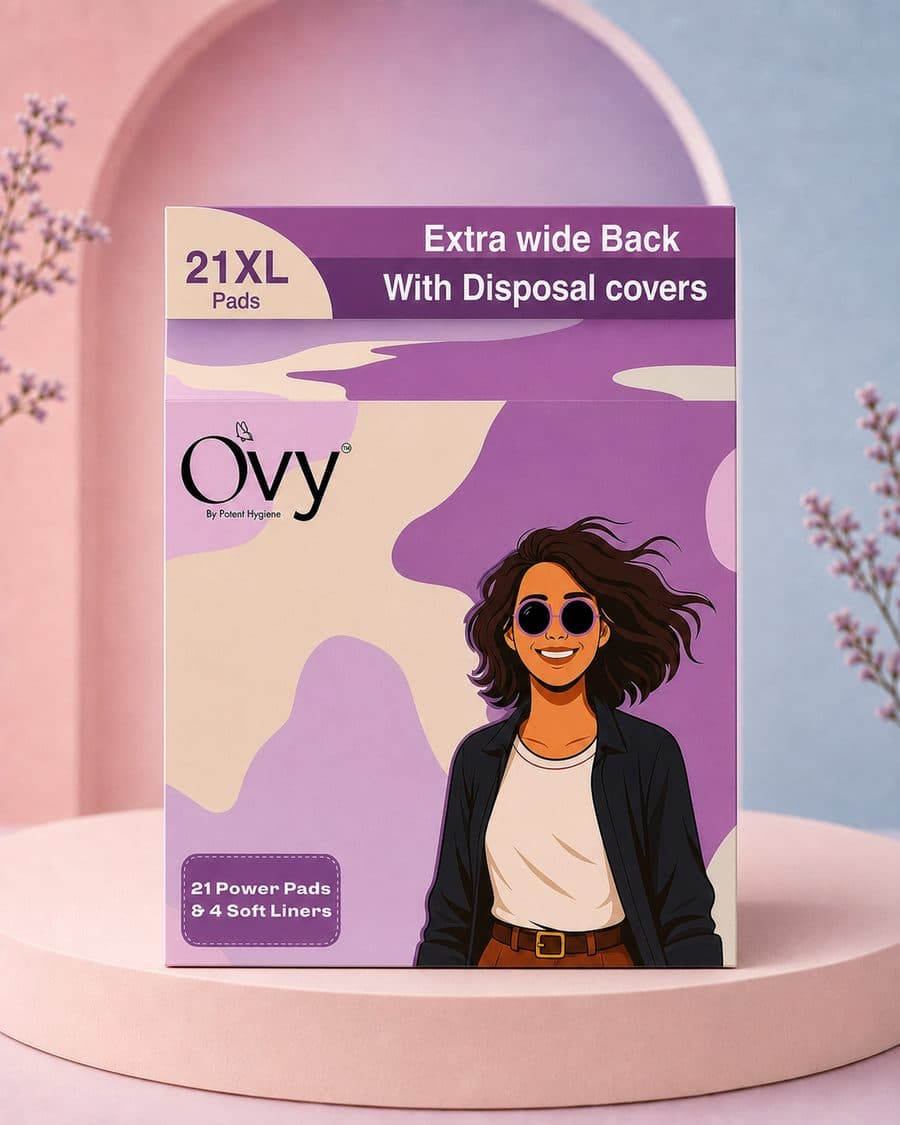
From Ovy
Ovy Organic Sanitary Pads
Ovy Organic Sanitary Pads come in L, XL and XL+, so you can keep a mix for a cycle you cannot predict. They are dermatologically tested and clinically tested on 24 volunteers.
When to see a doctor about PCOS symptoms
See a doctor if your periods are often more than 35 days apart, stop for three months when you are not pregnant, or come with new acne and hair growth together. A gynaecologist or endocrinologist can confirm or rule out PCOS and check for the other conditions that look like it.
- Very heavy bleeding: soaking through an XL+ pad (or a period panty) in under 2 hours for several hours in a row, or passing clots bigger than a ₹5 coin.
- Periods that last longer than 7 days, or that come less than 21 or more than 35 days apart once your cycle has settled.
- Severe period pain that stops you from your day, or that doesn't ease with the usual measures.
- Bleeding between periods, after sex, or ANY bleeding after menopause.
- Periods that stop for 3 months or more when you are not pregnant.
- Signs of infection: unusual discharge, a strong smell, itching, or burning when you pee.
- After childbirth: a fever, foul-smelling discharge, or very heavy bleeding that does not ease after the first week.
- No period by age 15, or no signs of puberty by age 13.
This is guidance, not a diagnosis. If something feels off, trust yourself and see a doctor or gynaecologist. Most causes are common and treatable.
Frequently asked questions
What are the first signs of PCOS?
The first sign is usually irregular periods: cycles longer than 35 days, very few periods a year, or months with none. Acne that lasts past the teens, extra hair on the face or body, scalp hair thinning and weight gain around the waist often come with it. These signs can have other causes too, so a doctor needs to check before calling it PCOS.
How common is PCOS in India?
Very common. A national study funded by the Indian Council of Medical Research, published in JAMA Network Open in 2024, found that 19.6% of women aged 18 to 40 met the Rotterdam criteria for PCOS. Worldwide, WHO estimates 10 to 13% of women of reproductive age have it, and up to 70% do not know.
What is the best Indian diet for PCOS?
There is no single best PCOS diet. A helpful Indian plate is half vegetables and salad, a protein such as dal, rajma, paneer, curd, eggs or fish, and a smaller portion of roti, rice or millets. Cut down on sugary drinks, sweets and packaged snacks, eat at regular times, and pair this with daily movement. A registered dietitian can tailor it to you.
Can PCOS be cured permanently?
There is no permanent cure yet, but PCOS symptoms can be managed well. Healthy eating, regular exercise and good sleep help most women, and doctors can add treatment for irregular periods, skin and hair changes, or fertility, depending on your goals. Regular checks for blood sugar, blood pressure and cholesterol help protect your long-term health.
Can I get pregnant if I have PCOS?
Yes, many women with PCOS get pregnant, some naturally and some with help. PCOS can make ovulation irregular, so it may take longer. If you are trying to conceive and your periods are irregular, see a doctor early rather than waiting a full year. Treatment for ovulation problems in PCOS is often effective.
Why is PCOS being renamed PMOS?
In May 2026, an international group of experts announced in The Lancet that PCOS will be renamed polyendocrine metabolic ovarian syndrome (PMOS). The old name wrongly suggested the ovaries are full of harmful cysts and hid the condition's effects on metabolism and hormones. The change is being introduced gradually, so doctors may use either name for now.
Sources
- World Health Organization: Polycystic ovary syndrome fact sheet (opens in a new tab)
- NHS: Polycystic ovary syndrome (PMOS, formerly PCOS) (opens in a new tab)
- Ganie MA, et al. Prevalence, Phenotypes, and Comorbidities of Polycystic Ovary Syndrome Among Indian Women. JAMA Network Open, 2024 (ICMR-PCOS study) (opens in a new tab)
- Monash University (MCHRI): International evidence-based PCOS (PMOS) guideline (opens in a new tab)
- AJMC: PCOS renamed PMOS in landmark shift (The Lancet, May 2026) (opens in a new tab)
- ACOG: Abnormal uterine bleeding (opens in a new tab)

Team Potent Hygiene
Written by the Potent Hygiene team in Jaipur, the people behind Ovy period care and Looway travel hygiene. Every article is checked against the public health sources listed with it.
- #PCOS
- #PMOS
- #Irregularperiods
- #Hormonehealth
- #Indiandiet
Found this useful?
Share it with someone who needs it, or keep reading the Journal.