
Day one, 11 am, and the familiar ache has started low in your tummy and back. You have a presentation at 2, or a board exam, or a family function where you will be on your feet all evening. Good period pain relief is one of the most searched health needs in India, and you do not have to just grit your teeth through it.
This guide explains why periods hurt, the home remedies with the best evidence (heat and exercise top the list), simple stretches, what to eat and drink, how to cope at school or work, and the signs that your pain is not ordinary cramping and needs a doctor.
Why do periods hurt?
Your womb is a muscle. During a period it tightens to shed its lining, and natural chemicals called prostaglandins drive those contractions. ACOG explains that prostaglandin levels are highest on the first day, which is why cramps usually ease after the first day or two. The pain is often a dull ache in the lower tummy that can spread to the back and thighs.
Period pain is very common. ACOG says more than half of women who menstruate have some pain for 1 to 2 days each month. Pain that comes with no underlying condition is called primary dysmenorrhoea; ACOG says it begins soon after periods start and often becomes less painful with age, and sometimes after giving birth.
Period pain relief: which home remedies actually work?
The home remedies with the best evidence are heat and exercise. A 2018 review of trials found heat therapy may ease period pain, and a 2019 Cochrane review found regular exercise may give a large reduction in pain intensity, though the studies were small. Rest, warm baths, massage and sleep also help many women.
Heat
- How to do it
- A hot water bag (wrapped in a towel), heat pad, or warm bath on the tummy or lower back
- What we know
- Recommended by the NHS and ACOG; a 2018 review of six trials found suggestive evidence it eases pain
Regular exercise
- How to do it
- Walking, yoga, cycling, dance or swimming on most days of the month, not just during your period
- What we know
- A 2019 Cochrane review found it may greatly reduce pain; most studies used about 45 to 60 minutes, three times a week
Gentle movement on the day
- How to do it
- A short walk or light stretching
- What we know
- Many women find it eases cramps and lifts mood
Massage
- How to do it
- Slow circles on the lower tummy and back
- What we know
- The NHS lists it as something to try
Not smoking, less alcohol
- How to do it
- Cutting down or stopping
- What we know
- The NHS says this may help ease period pain
Relaxation
- How to do it
- Slow belly breathing, meditation, a calm routine
- What we know
- ACOG mentions relaxation techniques as a non-medicine option
| Remedy | How to do it | What we know |
|---|---|---|
| Heat | A hot water bag (wrapped in a towel), heat pad, or warm bath on the tummy or lower back | Recommended by the NHS and ACOG; a 2018 review of six trials found suggestive evidence it eases pain |
| Regular exercise | Walking, yoga, cycling, dance or swimming on most days of the month, not just during your period | A 2019 Cochrane review found it may greatly reduce pain; most studies used about 45 to 60 minutes, three times a week |
| Gentle movement on the day | A short walk or light stretching | Many women find it eases cramps and lifts mood |
| Massage | Slow circles on the lower tummy and back | The NHS lists it as something to try |
| Not smoking, less alcohol | Cutting down or stopping | The NHS says this may help ease period pain |
| Relaxation | Slow belly breathing, meditation, a calm routine | ACOG mentions relaxation techniques as a non-medicine option |
Period pain relief exercises and yoga stretches to try
Gentle stretches relax tight muscles in the lower back, hips and tummy, and can take the edge off cramps in a few minutes. Move slowly, breathe deeply, and stop any position that hurts. You can do all of these on a mat or bed at home.
Step 1: Cat-cow
On hands and knees, slowly arch your back up, then let your tummy drop and lift your head. Repeat 8 slow rounds to loosen a tight lower back.Step 2: Child's pose (balasana)
Kneel, sit back on your heels and stretch your arms forward with your forehead down. Hold for 30 seconds while breathing into your belly.Step 3: Knees to chest
Lie on your back and hug both knees gently towards your chest. Rock slowly side to side to massage the lower back.Step 4: Supine twist
Lying on your back, drop both bent knees to one side with arms out wide. Hold for 30 seconds, then switch sides.Step 5: Hip circles
Standing with hands on hips, make slow, wide circles in each direction to ease pelvic tension.Step 6: Deep belly breathing
Breathe in through your nose for four counts, letting your tummy rise, and out for six. Six slow breaths calm cramp tension.
The bigger benefit comes from moving regularly through the whole month. A daily brisk walk, a dance class or a yoga routine you enjoy is a period pain remedy as well as everything else.
What to eat and drink during periods for cramps
No food cures cramps, but regular, warm, balanced meals help your energy and mood, and staying hydrated can make you feel better. Many women feel worse with skipped meals, very salty or oily food, or lots of caffeine. Iron-rich foods help make up for what you lose, especially if your periods are heavy.
- Drink water through the day. Warm drinks such as plain ginger tea or jeera water are comforting; the warmth itself helps many women.
- Eat iron-rich foods: dal, rajma, chana, leafy greens such as palak and methi, jaggery, dates, and eggs or meat if you eat them.
- Add vitamin C from amla, lemon, orange or guava to help your body absorb the iron.
- Eat small, regular meals rather than skipping; low blood sugar makes tiredness and mood worse.
- Go easier on very salty snacks (bloating), lots of tea, coffee and cola, and heavy fried food.
Traditional remedies such as ajwain water or haldi doodh are fine to enjoy as warm drinks, but there is little good evidence that they treat period pain, so they are no substitute for a doctor's visit if pain is severe.
Can you take medicine for period cramps?
Over-the-counter pain relief helps many women, and both the NHS and ACOG list it alongside heat and exercise. Which medicine is suitable, and how much, depends on your health, age and any other medicines you take, so ask a pharmacist or doctor. Do not take someone else's prescription.
How to manage period pain at school, college or work
Plan for your first heavy day: wear comfortable clothes, carry what you need, and give yourself small breaks to stretch or walk. If pain regularly keeps you home, that is a sign to see a doctor, not something to hide from teachers or managers.
Your day-one bag
- Two or three pads and a spare pair of underwear
- A small heat patch or a flask of warm water
- A water bottle and a snack such as a fruit, nuts or roasted chana
- Any pain relief your doctor or pharmacist has advised
- A cardigan or jacket to tie around your waist if needed
Comfortable protection helps too. A soft, well-fitting pad you change every 4 to 6 hours avoids the extra irritation of chafing on a day you already feel sore. Track your pain in our free period tracker so you can see which days are worst and plan around them.
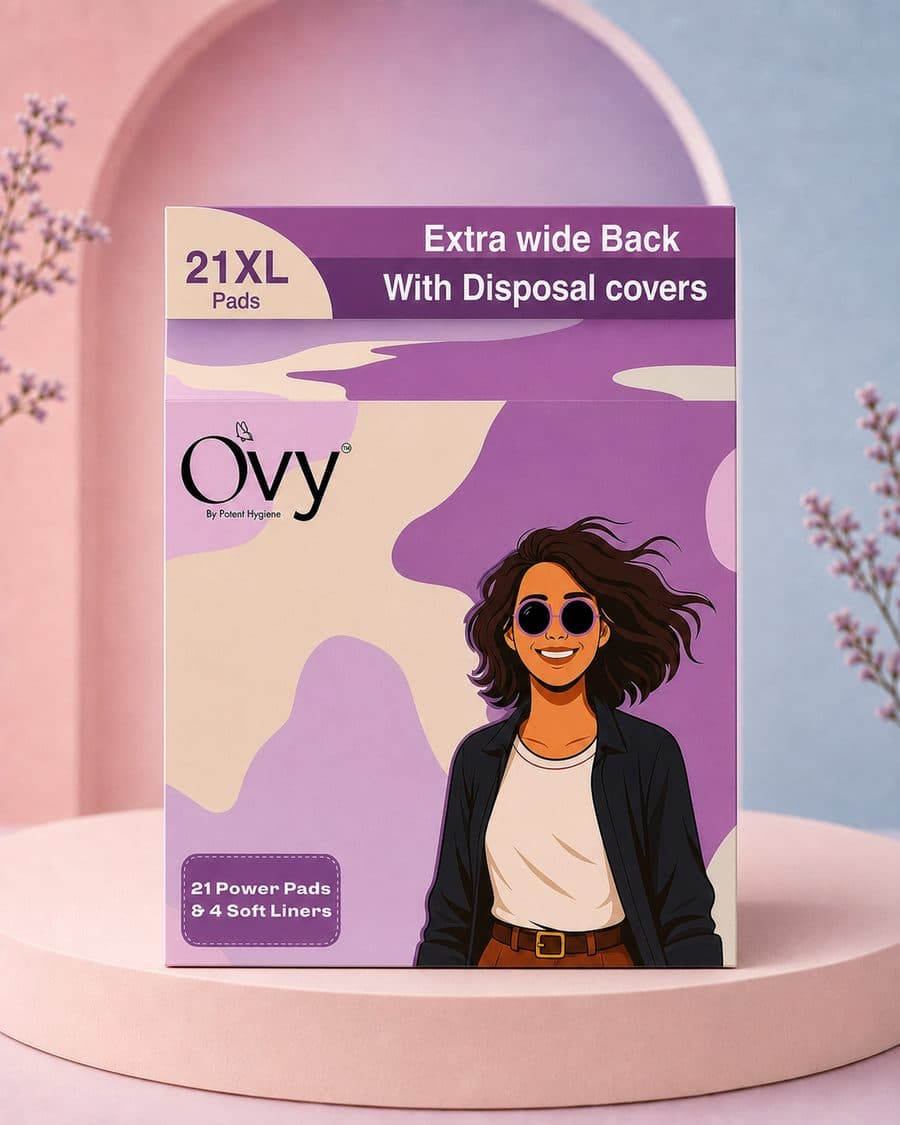
From Ovy
Ovy Organic Sanitary Pads
Ovy Organic Sanitary Pads are dermatologically tested and rash-free, in L, XL and XL+, so you can match the size to your flow on the days you least want extra discomfort.
Is severe period pain normal?
No. Period pain that stops you going to school or work, makes you vomit or faint, does not ease with heat and usual pain relief, or gets worse year after year is not ordinary cramping. It can be caused by conditions such as endometriosis, adenomyosis, fibroids or pelvic inflammatory disease, which a doctor can diagnose and treat.
Pain that starts days before your period or lasts after it, pain during or after sex, and pain when you pee or poo are other signs to mention. Our guide to endometriosis symptoms explains why this condition is so often missed. If your periods are also very heavy, read our guide to heavy periods.
When to see a doctor about period pain
See a doctor if period pain stops you from your day, is getting worse, or comes with heavy or irregular bleeding, pain during sex, or pain when you go to the toilet. The NHS advises urgent help if pain is severe or worse than usual and pain relief has not helped. Get help quickly, too, for period pain with a fever.
- Very heavy bleeding: soaking through an XL+ pad (or a period panty) in under 2 hours for several hours in a row, or passing clots bigger than a ₹5 coin.
- Periods that last longer than 7 days, or that come less than 21 or more than 35 days apart once your cycle has settled.
- Severe period pain that stops you from your day, or that doesn't ease with the usual measures.
- Bleeding between periods, after sex, or ANY bleeding after menopause.
- Periods that stop for 3 months or more when you are not pregnant.
- Signs of infection: unusual discharge, a strong smell, itching, or burning when you pee.
- After childbirth: a fever, foul-smelling discharge, or very heavy bleeding that does not ease after the first week.
- No period by age 15, or no signs of puberty by age 13.
This is guidance, not a diagnosis. If something feels off, trust yourself and see a doctor or gynaecologist. Most causes are common and treatable.
Frequently asked questions
What is the fastest way to relieve period cramps at home?
Heat is one of the quickest home remedies: a hot water bag wrapped in a towel, a heat pad or a warm bath on your tummy or lower back. Add gentle stretches such as child's pose or knees to chest, slow belly breathing and rest. A pharmacist or doctor can advise on suitable pain relief and how much to take for you.
Does a hot water bag help period pain?
Yes, for many women. Both the NHS and ACOG recommend heat, and a 2018 review of trials found suggestive evidence that heat therapy eases period pain. Wrap the hot water bag in a towel, and never put very hot water directly on your skin or sleep with a heating pad on.
Which exercise is best for period pain?
Any regular exercise you enjoy, such as walking, yoga, cycling, dancing or swimming. A 2019 Cochrane review found exercise may greatly reduce period pain, with most studies using sessions of about 45 to 60 minutes three times a week. On painful days, gentle stretches such as cat-cow and child's pose can ease cramps.
What should I eat to reduce period cramps?
No food cures cramps, but regular, warm, balanced meals and plenty of water help many women feel better. Include iron-rich foods such as dal, rajma, chana, leafy greens and jaggery, with vitamin C from amla, lemon or orange. Go easier on very salty, oily food and lots of caffeine, which can add to bloating and discomfort.
Why does period pain spread to my back and legs?
Pain from the womb is often felt in the lower back and upper thighs as well, which is called referred pain. This is common and usually normal. Heat on the lower back and gentle stretches can help. If back or leg pain is severe, lasts beyond your period or comes with other symptoms, see a doctor.
When is period pain a sign of something serious?
Period pain needs a doctor's check if it stops you from your day, does not ease with heat and usual pain relief, gets worse over the years, or comes with very heavy bleeding, pain during sex, or pain when you pee or poo. These can be signs of endometriosis, adenomyosis, fibroids or infection, which are all treatable.
Sources
- NHS: Period pain (opens in a new tab)
- ACOG: Dysmenorrhea, painful periods (opens in a new tab)
- Cochrane: Exercise for dysmenorrhoea (period pain), 2019 review (opens in a new tab)
- Jo J, Lee SH. Heat therapy for primary dysmenorrhea: a systematic review and meta-analysis. Scientific Reports, 2018 (opens in a new tab)
- World Health Organization: Endometriosis fact sheet (opens in a new tab)

Team Potent Hygiene
Written by the Potent Hygiene team in Jaipur, the people behind Ovy period care and Looway travel hygiene. Every article is checked against the public health sources listed with it.
- #Periodpain
- #Cramps
- #Self-care
- #Dysmenorrhoea
- #Periodcare
Found this useful?
Share it with someone who needs it, or keep reading the Journal.